Boulder Wall vs Block Wall in Auburn Hillsides
A retaining wall on a hillside is not just a decorative feature. It is a structural element that holds back soil, manages runoff, and protects everything downhill from erosion. In Auburn, where sloped lots and red clay soil are common, choosing the wrong wall system can lead to shifting, cracking, or complete failure within just a few years.
At Razor Sharp Lawns, we design and build hillside retaining walls that are engineered for Northeast Georgia conditions. Whether you are considering a natural boulder wall or a segmental block wall, the decision should be based on soil conditions, slope angle, drainage requirements, and long-term performance, not just appearance.
This guide explains how boulder walls and segmental block walls perform on Auburn hillsides, what factors truly determine durability, and how our team integrates structural design with hardscaping installations, proper drainage planning, and insights from our Landscape Pricing Guide to help homeowners make informed decisions.
Understanding hillside pressure in Auburn
Before comparing materials, it is important to understand what a retaining wall is actually fighting against. Auburn’s clay-heavy soil absorbs water and expands. On a slope, that creates significant lateral pressure against any wall holding it back.
Forces acting on a hillside retaining wall:
-
- Hydrostatic pressure from trapped water
- Soil expansion during heavy rain
- Gravity pulling saturated soil downhill
- Surface runoff accelerating erosion
- Freeze and thaw cycles in colder months
If a wall system does not properly account for drainage, base preparation, and reinforcement, it will eventually fail. The material you choose matters, but installation and engineering matter even more.
Boulder walls on a hillside
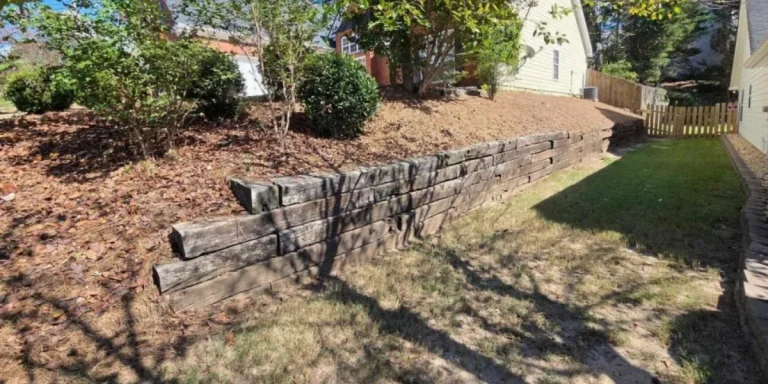
Boulder retaining walls use large natural stones stacked and partially buried into the slope. They offer a rugged, organic look that blends well into wooded or natural landscapes.
Advantages of boulder walls:
-
- Natural appearance that complements wooded properties
- Heavy individual stones provide mass and resistance
- Gaps between stones can allow limited drainage
- Less formal look for rustic landscapes
However, boulder walls rely heavily on weight and placement rather than interlocking systems. On steeper Auburn hillsides, that can become a limitation.
Potential limitations on steep slopes:
-
- Less structural reinforcement compared to engineered block systems
- Difficult to achieve precise vertical alignment
- Limited height capacity without terracing
- Requires large excavation footprint
When installed properly with excavation into the hillside and a gravel drainage zone behind the stones, boulder walls can perform well for moderate slopes. But for taller walls or highly loaded hillsides, they may not provide the same engineered stability as segmental block systems.
Segmental block walls on a hillside
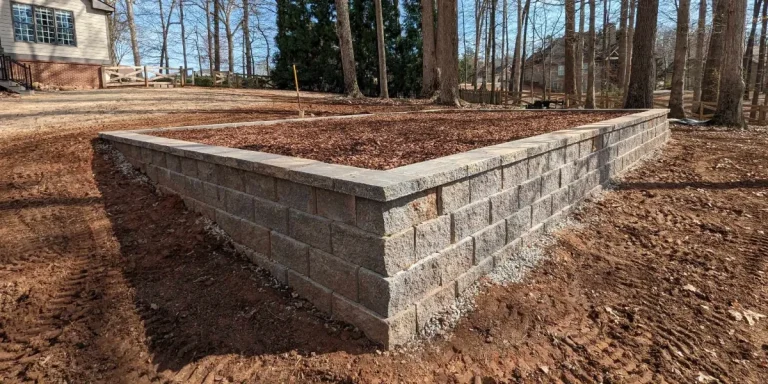
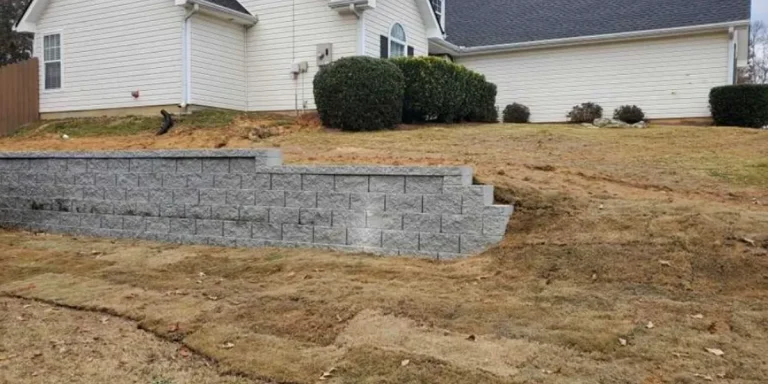
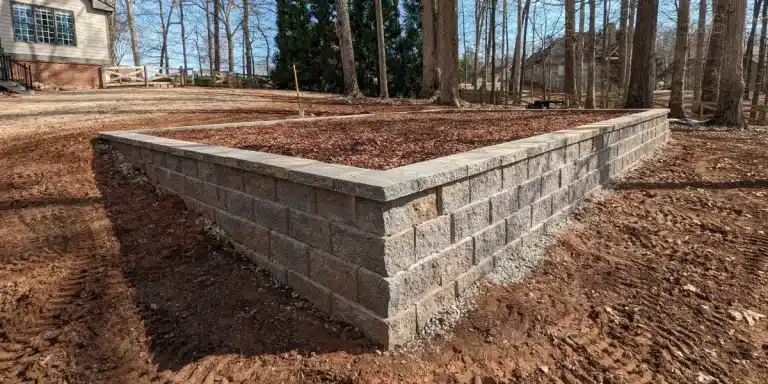
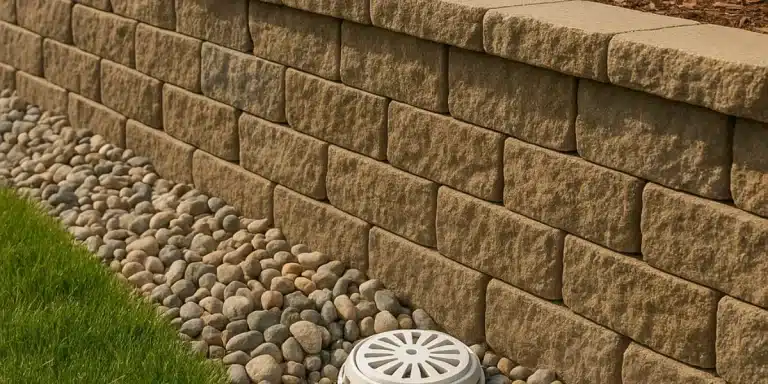
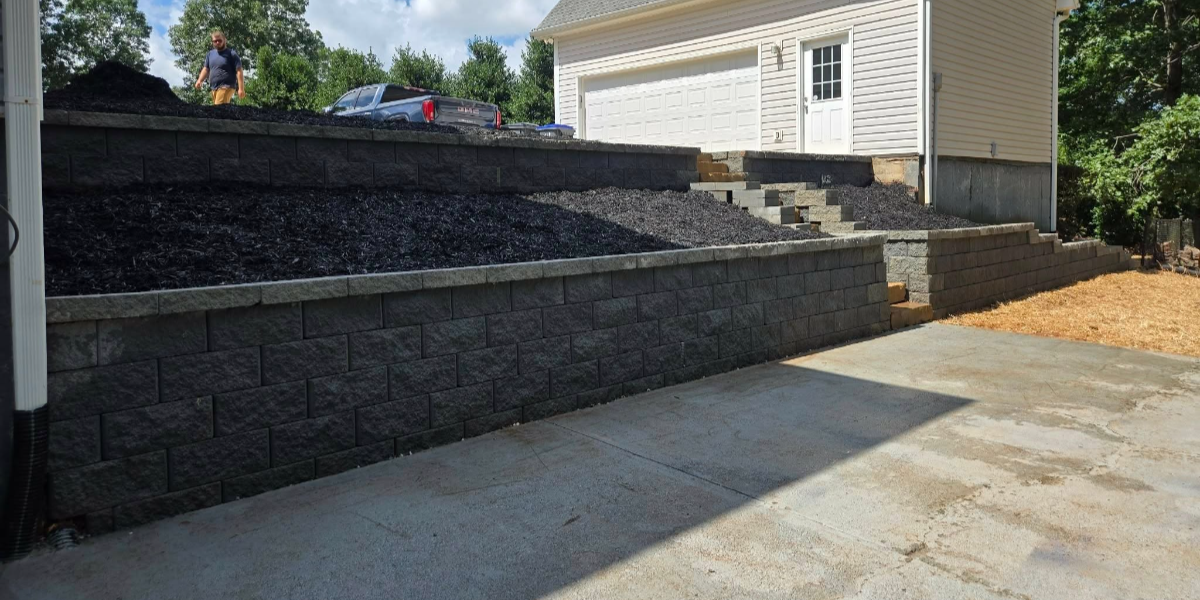
Segmental block retaining walls use interlocking concrete units designed specifically for soil retention. These systems are engineered with setback angles and reinforcement options.
Advantages of segmental block walls:
-
- Interlocking design increases structural stability
- Can incorporate geogrid reinforcement for taller walls
- Precise alignment and clean appearance
- Higher load capacity on steep hillsides
- More predictable engineering performance
On Auburn properties where homeowners want to create flat lawn space, support a paver patio, or protect a driveway, segmental block systems often provide greater long-term reliability.
These walls are built with compacted stone bases, drainage aggregate, perforated pipe systems, and in many cases geogrid reinforcement extending back into the slope. That reinforcement ties the wall into the hillside itself, increasing resistance to soil pressure.
Drainage determines which wall actually holds up
The most common reason retaining walls fail in Auburn is not the facing material. It is poor drainage. Whether you choose boulders or block, trapped water behind the wall creates hydrostatic pressure that pushes outward.
Essential drainage components include:
-
- Compacted crushed stone base
- Angular gravel backfill behind the wall
- Perforated drain pipe at the base
- Properly positioned outlet drains
- Surface grading to direct runoff away
At Razor Sharp Lawns, every retaining wall project begins with drainage design. On many Auburn hillsides, we integrate French drains or swales to manage water before it ever reaches the wall. Without this step, even the strongest wall system can shift or bulge over time.
Appearance versus performance
Some homeowners choose boulder walls purely for aesthetics. Others prefer the structured, architectural look of segmental block.
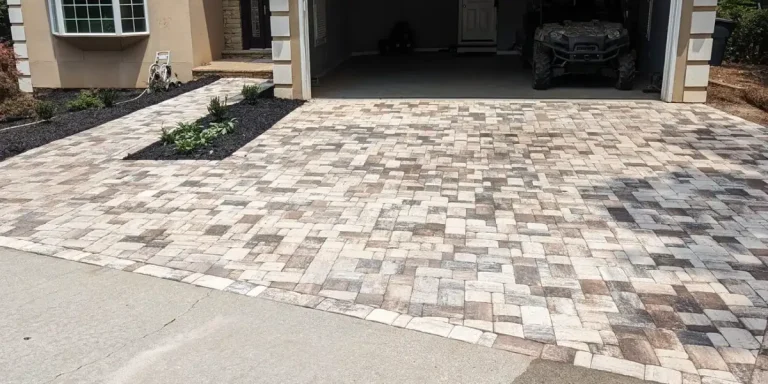
A boulder wall often fits wooded or rural properties where a natural landscape theme is desired. A segmental block wall typically complements more refined hardscape features such as paver walkways, driveways, and formal outdoor living areas.
The key is matching the wall system to both the structural requirements and the overall design of your property. In some Auburn projects, we even combine systems by using engineered block for primary structural support and decorative boulders for accent or terracing.
Cost considerations on Auburn hillsides
Material choice does impact cost, but hillside complexity plays a larger role. Excavation depth, soil removal, reinforcement, and drainage installation all affect total investment.
Generally:
-
- Boulder walls may have lower material costs but higher excavation demands
- Segmental block walls may require reinforcement materials but offer predictable engineering
- Taller walls require permits or engineering review in some cases
- Drainage installation significantly affects durability and cost
Homeowners often underestimate what is involved in proper hillside construction. Reviewing our Landscape Pricing Guide can help you understand how wall height, reinforcement, and drainage influence overall budgeting before committing to a design.
Common mistakes homeowners make
Retaining walls are not a weekend project. Many failed walls we replace on Auburn hillsides were built without professional planning.
Frequent installation errors include:
-
- Insufficient base depth and compaction
- No drainage pipe behind the wall
- Stacking boulders without proper embedment
- Skipping geogrid reinforcement for taller block walls
- Ignoring surface water runoff patterns
These mistakes often lead to leaning walls, separation between blocks, soil erosion, and eventual collapse. Repairing a failed wall typically costs more than installing it correctly from the start.
Areas We Serve
Razor Sharp Lawns proudly provides professional retaining wall construction, drainage installation, and complete landscape and hardscape design services throughout Northeast Georgia, including:
• Auburn
• Athens
• Gainesville
• Flowery Branch
• Oakwood
• Buford
• Surrounding areas
We build retaining walls designed for Georgia’s clay soils, heavy rain, and sloped terrain.
Ready to build a retaining wall that actually lasts?
Choose structure over guesswork
If you are deciding between a boulder wall and a segmental block wall for your Auburn hillside, the answer depends on slope severity, height requirements, drainage conditions, and long-term goals.
Contact Razor Sharp Lawns today to schedule your consultation or request an estimate. We will evaluate your hillside, recommend the right wall system for structural performance, and design a solution that protects your property for decades, not just a few seasons.