Why Drainage Mistakes Make Retaining Walls Lean
A retaining wall can look perfectly straight, tightly stacked, and professionally finished, yet still begin leaning within a few seasons. In Northeast Georgia, the most common reason is not poor block quality or weak stone. It is drainage failure.
At Razor Sharp Lawns, we are often called to inspect retaining walls that appear well built from the outside but are slowly shifting forward. In nearly every case, water trapped behind the wall is the real problem. When drainage is ignored or improperly installed, even a structurally sound wall will eventually lean.
This guide explains how drainage mistakes cause retaining walls to fail, what warning signs to watch for, and how we design retaining walls and drainage systems that prevent these issues from developing in the first place.
The hidden force behind leaning walls: hydrostatic pressure
Water is heavy. When soil behind a retaining wall becomes saturated, it exerts outward force on the structure. This force is called hydrostatic pressure.
In clay-heavy soil common throughout our service area, water does not drain quickly. It sits in the soil, increasing weight and pushing forward against the wall face.
What hydrostatic pressure does to a wall:
-
- Increases the load behind the wall by thousands of pounds
- Forces the center of the wall outward
- Creates subtle bulging before visible leaning
- Weakens joints and interlocking connections
- Accelerates settling at the base
A wall may look well aligned at installation, but if water is not relieved properly, that pressure builds quietly over time.
Mistake 1: No perforated drain pipe at the base
The most common drainage mistake is skipping the drain pipe entirely. Some installers rely on small gaps between blocks to allow water to escape. That is not enough.
A properly built wall includes a perforated pipe installed at the base, surrounded by clean gravel. This pipe collects water and carries it away before pressure builds.
Without it:
-
- Water accumulates after every rainfall
- Soil becomes saturated and heavier
- The wall begins to lean outward gradually
- Eventually, structural failure occurs
At Razor Sharp Lawns, we install perforated drain pipe in every structural retaining wall. It is wrapped in filter fabric and connected to proper outlet drains.
Mistake 2: Using native clay as backfill
Another common issue is backfilling behind the wall with the same clay soil that was excavated. Clay retains water, which increases pressure dramatically.
Behind a properly built wall, there should be a drainage zone of angular gravel that allows water to move freely toward the pipe.
When clay is used instead:
-
- Water becomes trapped behind the wall
- Fine particles clog the drainage system
- Hydrostatic pressure builds faster
- The wall begins shifting forward
We always install clean, angular stone behind retaining walls to create a consistent drainage channel.
Mistake 3: Blocked or missing outlet drains
Even when a drain pipe is installed, it must have a clear exit point. If the outlet is buried, too high, or clogged, water backs up inside the system.
Signs of outlet failure include:
-
- Water staining on the face of the wall
- Pooling at the base after rain
- Persistent dampness near joints
- Gradual outward tilt
Proper installation requires correct pipe slope and visible, functional outlet locations.
Mistake 4: Poor surface grading above the wall
Drainage is not just about what happens behind the wall. Surface water flowing toward the top of the wall can overwhelm even a properly installed drainage system.
Common grading errors:
-
- Driveways draining directly into the wall
- Lack of swales to redirect runoff
- Flat areas that allow water to pool above the structure
We evaluate the entire property when designing retaining walls. Often, we integrate French drains or swales to control water before it ever reaches the wall.
Mistake 5: Inadequate base preparation
Drainage issues are often compounded by shallow or poorly compacted bases. When the soil beneath the wall becomes saturated, it loses strength.
Without a deep, compacted stone base:
-
- The wall settles unevenly
- Forward rotation begins at the base
- Leaning becomes visible faster
Every retaining wall we build includes proper excavation and compacted aggregate to support both structure and drainage.
Warning signs your wall is starting to lean
Leaning rarely happens overnight. It begins subtly.
Early indicators include:
-
- Hairline gaps between blocks
- Bulging at the center of the wall
- Efflorescence or mineral staining
- Soil erosion at the base
- Drain outlets no longer flowing water
Addressing drainage problems early can prevent complete collapse.
Why cosmetic repairs do not fix drainage failures
Some contractors attempt to correct leaning walls by simply re-stacking blocks or adding surface reinforcement. Without addressing the drainage system behind the wall, these repairs are temporary.
True correction often requires:
-
- Removing sections of the wall
- Installing proper drainage pipe
- Replacing clay backfill with gravel
- Rebuilding on a compacted base
It is far more cost-effective to build the wall correctly the first time.
How we build retaining walls that resist leaning
Our retaining wall systems are designed as integrated structures.
Our process includes:
-
- Full site evaluation and grading assessment
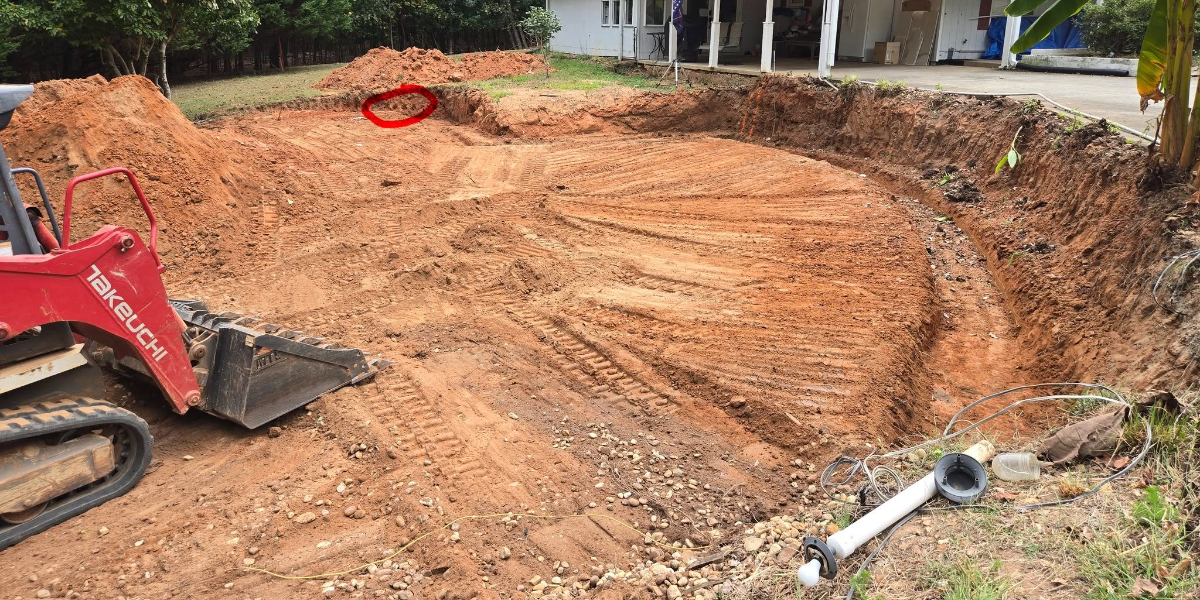
- Deep excavation for structural base preparation
- Compacted aggregate base installation
- Gravel drainage zone behind the wall
- Perforated drain pipe with proper slope
- Outlet drains positioned for gravity flow
For taller walls, we also incorporate geogrid reinforcement to tie the structure into the slope itself.
Homeowners often review our Landscape Pricing Guide to understand how proper drainage and reinforcement influence overall project cost.
Areas We Serve
Razor Sharp Lawns provides professional retaining wall construction, drainage correction, and full landscape design services throughout Northeast Georgia, including:
• Athens
• Auburn
• Jefferson
• Braselton
• Hoschton
• Monroe
• Gainesville
• Surrounding areas
We design durable outdoor structures built to handle Georgia’s clay soil and heavy rainfall.
Concerned your retaining wall may be leaning?
Address drainage before the problem worsens
If your retaining wall is showing signs of shifting or leaning, the issue is often hidden behind the wall.
Contact Razor Sharp Lawns today to schedule a consultation or request an estimate. We will inspect your drainage system, identify the root cause of movement, and recommend a long-term solution that protects your property.