Erosion Control Solutions for Jefferson Backyards
Water should move through your backyard in a controlled way. In Jefferson, many properties sit on gentle to steep slopes with clay-heavy soil that sheds water quickly during storms. When runoff is not managed correctly, it cuts channels through lawns, washes out planting beds, and slowly undermines patios, fences, and retaining walls.
At Razor Sharp Lawns, we treat backyard erosion as a drainage and structural issue, not just a surface problem. Throwing down seed or spreading more mulch may hide the damage for a short time, but it does not stop the force causing it. Lasting results require proper grading, engineered drainage, and stabilization built for Northeast Georgia soil.
This guide explains how erosion starts in Jefferson backyards, what solutions actually work, and how we integrate drainage systems, grading corrections, and structural improvements to permanently protect your property.
Why erosion is so common in Jefferson backyards
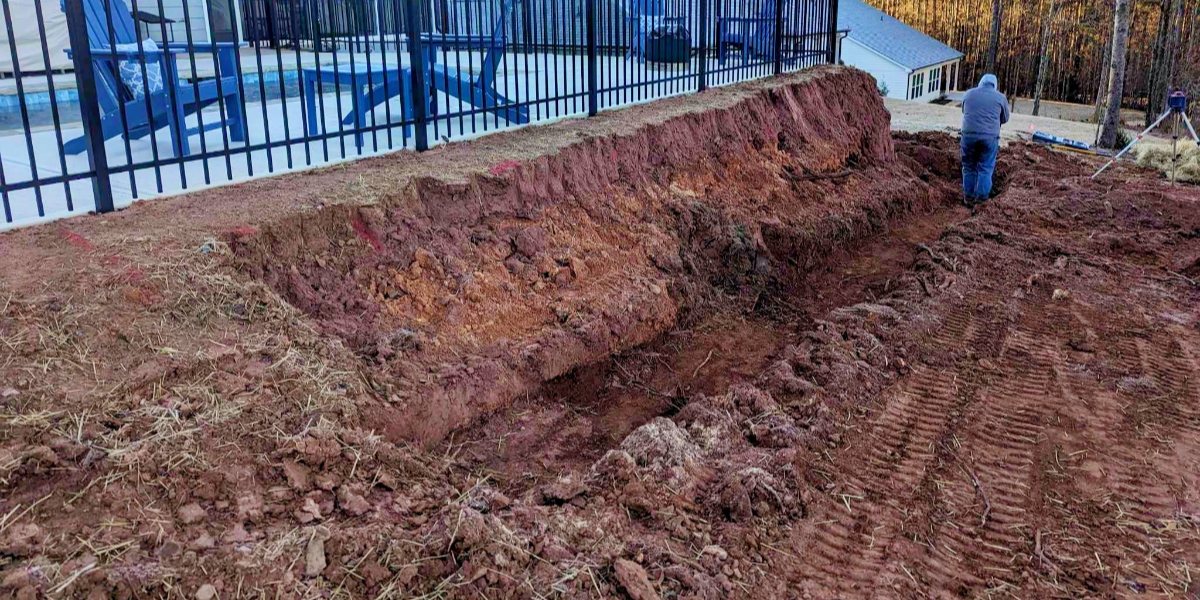
Jefferson’s red clay soil compacts easily and drains slowly. During heavy rain, water runs across the surface instead of soaking in. On sloped lots, that surface runoff accelerates downhill, gaining enough force to carve trenches and wash away soil.
Common erosion triggers we see in Jefferson:
-
- Downspouts dumping water directly onto slopes
- Backyard grading that directs water toward low corners
- Bare soil without grass or root systems
- Drainage from neighboring properties entering the yard
- Improperly built retaining walls without drainage
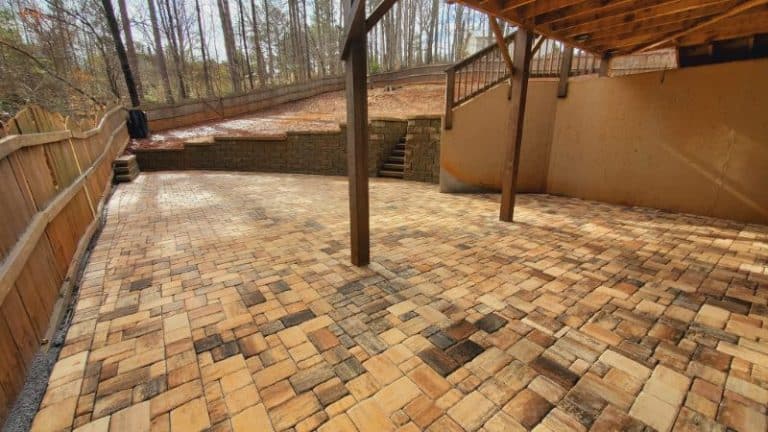
Left unchecked, erosion exposes roots, destabilizes fences, and can undermine paver patios and outdoor living areas. What starts as a muddy channel often turns into a structural repair.
Step 1: Evaluate how water actually moves
The visible washout area is rarely the true source of the problem. Water may begin collecting at a roof edge, driveway, or high point before accelerating downhill.
Our evaluation process includes:
-
- Identifying high and low elevations across the yard
- Mapping runoff patterns during heavy rainfall
- Inspecting downspout discharge points
- Checking soil compaction and infiltration rates
- Reviewing existing hardscape and slope transitions
By analyzing the entire drainage pattern, we design a solution that addresses the cause rather than just the damage.
Step 2: Correct grading to control flow
Proper grading is the foundation of erosion control. If water is allowed to concentrate in one narrow path, it will continue cutting through clay soil.
Our grading solutions may involve:
-
- Reshaping slopes to distribute water evenly
- Creating shallow swales that guide runoff safely
- Filling low pockets that trap standing water
- Compacting soil properly after reshaping
Controlled grading reduces water speed and prevents the formation of deep erosion channels.
Step 3: Install subsurface drainage systems
In many Jefferson backyards, grading alone is not enough. Heavy rainfall events require engineered drainage to relieve pressure.
Drainage systems we commonly install include:
-
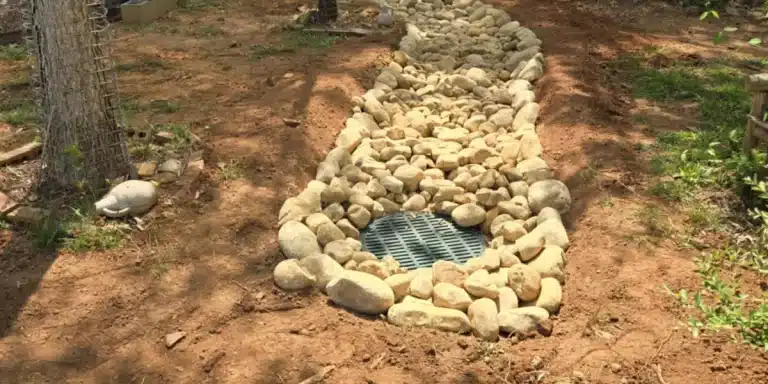
- French drains to capture subsurface water
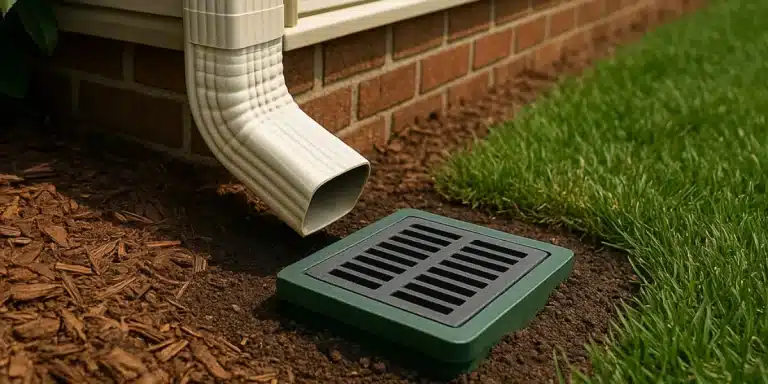
- Catch basins at natural low points
- Channel drains near patios and hardscape edges
- Buried downspout extensions to redirect roof runoff
Every pipe is installed with proper slope and surrounded by clean aggregate to maintain flow. We ensure discharge points release water away from vulnerable areas so it does not reappear downhill.
Step 4: Reinforce slopes with structural support
On steeper Jefferson properties, structural reinforcement may be necessary to permanently stabilize soil.
We often incorporate:
-
- Retaining walls to hold back unstable slopes
- Terracing to break long grades into manageable levels
- Stone borders to contain planting beds
- Stabilized steps to prevent foot traffic erosion
When building retaining walls, we include compacted stone bases, gravel backfill, and perforated drain pipe systems. Without these components, walls can trap water and worsen erosion instead of preventing it.
Step 5: Stabilize soil with plantings
After structural and drainage corrections, vegetation plays an important role in long-term stability.
Effective soil stabilization methods include:
-
- Installing deep-rooted shrubs on slopes
- Planting erosion-control grasses
- Adding groundcover to reduce exposed soil
- Using temporary erosion-control matting during establishment
Plant roots bind soil together and reduce runoff velocity. However, planting alone cannot correct severe drainage issues without prior grading and structural solutions.
Why quick fixes usually fail
Temporary erosion solutions often look promising at first. Spreading gravel, adding straw, or installing small decorative edging may hide the problem, but they rarely stop water flow.
Common DIY shortcomings:
-
- Improperly sloped drain pipe that backs up
- Surface materials washing away after heavy rain
- Undersized retaining walls without reinforcement
- Ignoring runoff from neighboring properties
Backyard erosion requires an integrated system. Without proper design and installation, short-term patches often lead to larger repairs later.
Understanding the investment
Erosion repair costs depend on slope severity, soil conditions, drainage complexity, and whether structural reinforcement is needed. Minor grading adjustments are far less expensive than rebuilding a collapsed wall or replacing a damaged patio.
Homeowners researching erosion correction often review our Landscape Pricing Guide to understand how excavation, drainage installation, and retaining wall construction influence overall project cost.
Addressing erosion early almost always reduces long-term expense.
Areas We Serve
Razor Sharp Lawns provides professional erosion control, drainage installation, retaining wall construction, and full backyard landscape solutions throughout Northeast Georgia, including:
• Jefferson
• Athens
• Auburn
• Gainesville
• Flowery Branch
• Oakwood
• Surrounding areas
We design systems built specifically for Georgia’s heavy rainfall and clay soil conditions.
Ready to stop backyard erosion for good?
Protect your yard before the damage spreads
If your Jefferson backyard shows signs of soil loss, standing water, or slope instability, a professional evaluation is the safest next step.
Contact Razor Sharp Lawns today to schedule your consultation or request an estimate. We will assess your drainage patterns, grading, and structural needs and design a long-term solution that protects your yard and your home.