Fixing Lawn Erosion and Runoff in Pendergrass
A sloped lawn can seem harmless during dry stretches. The grass may look green, and the grade might not feel extreme. In Pendergrass, however, heavy rainstorms quickly reveal whether your yard was built to handle runoff. When water starts carving shallow channels through turf and carrying soil downhill, it is only a matter of time before nearby patios, walkways, or retaining walls are affected.
At Razor Sharp Lawns, we treat lawn erosion as an early structural warning sign. If runoff is already cutting through your slope, the underlying grading and drainage system are not working properly. Left untreated, that water will eventually undermine hardscaping installations, clog drainage lines, and destabilize retaining walls.
This guide explains why sloped lawns erode in Pendergrass, how runoff damages hardscaping, what long-term solutions actually work, and how to plan your project realistically using insights from our Landscape Pricing Guide.
Why erosion happens so quickly on sloped lawns in Pendergrass
Pendergrass properties often sit on rolling terrain with clay-heavy soil. Clay drains slowly and compacts tightly. When intense rainfall hits a sloped lawn, water travels across the surface instead of soaking in.
As that water accelerates downhill, it gains force. Even shallow slopes can develop erosion problems over time. Each storm strips away a thin layer of soil. Eventually, you begin seeing visible channels.
Contributing factors we commonly see include:
-
- Roof downspouts discharging directly onto slopes
- Driveway runoff feeding into the lawn
- Compacted soil preventing absorption
- Thin turf coverage exposing bare soil
- Long uninterrupted slopes with no runoff breaks
What makes erosion dangerous is that it compounds. The deeper a channel becomes, the faster water moves through it during the next storm.
How lawn erosion leads to hardscape damage
Many homeowners focus on the lawn itself, not realizing how quickly erosion can affect nearby structures.
When soil washes downhill, it often collects against:
-
- Paver patios
- Walkways and steps
- Driveway edges
- Retaining walls
Over time, runoff can:
-
- Undermine paver bases
- Wash out joint sand
- Create voids beneath hardscape surfaces
- Increase hydrostatic pressure behind walls
- Clog drainage outlets
Once hardscaping begins shifting, repairs become far more expensive than early erosion control.
Step 1: Trace runoff to its source
The visible erosion channel is rarely the starting point. Water often originates higher up the property.
We begin every project with a full site assessment, evaluating:
-
- Roof drainage patterns
- Downspout discharge locations
- Driveway slope direction
- Neighboring property runoff contributions
- High and low elevation transitions
Identifying the source allows us to control runoff before it accelerates down the slope.
Step 2: Improve grading to slow water movement
Water does not need to be completely stopped. It needs to be slowed and redirected safely.
Grading adjustments often include:
-
- Creating shallow swales to disperse runoff
- Breaking up long slopes with subtle contour changes
- Filling eroded trenches and compacting properly
- Adjusting grade near patios and retaining walls
Shortening runoff paths reduces velocity. Slower water causes less soil displacement.
Step 3: Install subsurface drainage systems
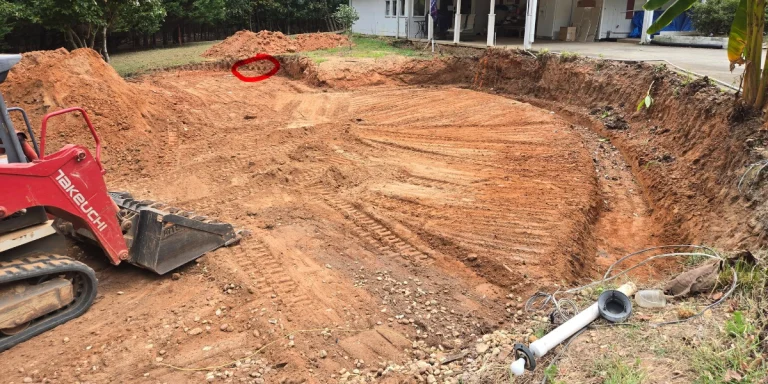
In many Pendergrass yards, grading improvements alone are not enough. Heavy storms require engineered drainage.
We commonly install:
-
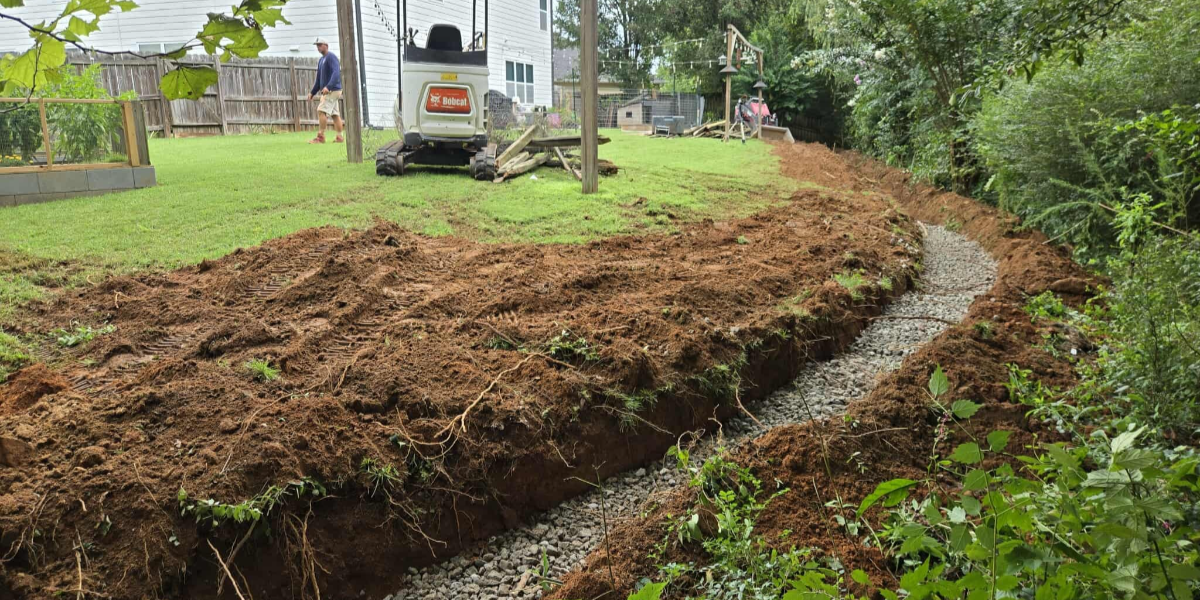
- French drains to capture subsurface water
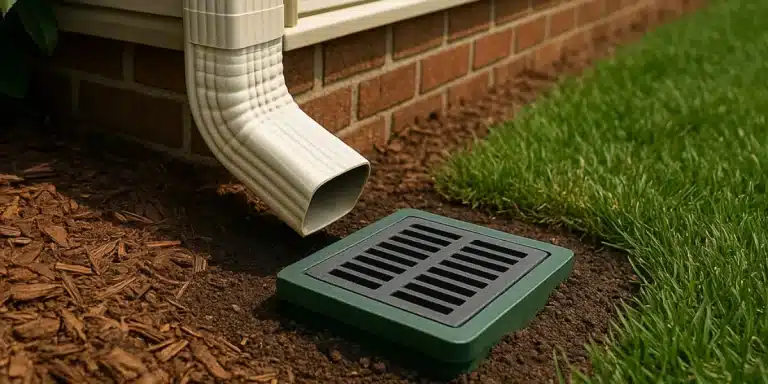
- Catch basins at low collection points
- Channel drains at patio edges
- Buried downspout extensions connected to outlet pipes
Proper installation includes perforated pipe, clean angular gravel, filter fabric, and correct slope to ensure long-term flow.
Step 4: Stabilize slopes with structural reinforcement
When slopes are steep or soil has already lost stability, structural reinforcement may be required.
Solutions may include:
-
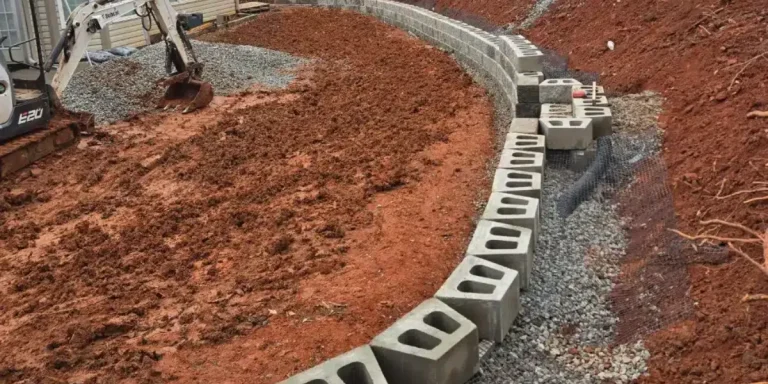
- Low retaining walls to hold back soil
- Terracing to divide long slopes into shorter segments
- Stone edging to protect hardscape boundaries
Every structural solution must include drainage behind the wall to prevent hydrostatic pressure from building.
Step 5: Reinforce soil with vegetation
After grading and drainage corrections, plantings play a critical role in long-term stabilization.
Effective erosion-control planting strategies include:
-
- Deep-rooted shrubs that anchor soil
- Groundcover plants to reduce exposed areas
- Erosion-control grasses
- Mulch or stone to protect newly graded surfaces
Root systems bind soil particles together and reduce surface runoff velocity. However, planting alone cannot fix structural grading problems.
Why temporary fixes fail
Spreading straw, dumping gravel, or reseeding bare areas may temporarily improve appearance. But without correcting water flow, erosion will return.
Common temporary solutions that fail:
-
- Loose gravel without proper base preparation
- Surface trench drains with no outlet slope
- Overseeding without soil stabilization
- Ignoring roof runoff contributions
Water always finds the path of least resistance. Unless grading and drainage are corrected, the problem persists.
Protecting your hardscape investment
If you have already invested in patios, walkways, or retaining walls, erosion control should be prioritized.
Proper drainage:
-
- Prevents washout beneath pavers
- Reduces soil buildup against walls
- Protects base material from saturation
- Extends the life of hardscape installations
Ignoring erosion can ultimately require partial or full hardscape reconstruction.
Long-term durability considerations
Erosion control should be designed for decades, not seasons.
We focus on:
-
- Proper excavation depth
- Compacted base materials
- Reliable drainage outlets
- Integrated structural reinforcement where needed
- Balanced planting for soil stability
Each component works together to manage water safely across the property.
Understanding the investment
Erosion correction costs depend on slope severity, drainage complexity, and structural requirements.
Key cost drivers include:
-
- Extent of excavation and grading
- Drainage system installation
- Retaining wall construction if required
- Planting and stabilization materials
Homeowners reviewing erosion solutions often consult our Landscape Pricing Guide to understand how drainage and structural elements affect budgeting.
Addressing runoff early almost always reduces total long-term expense.
Common homeowner mistakes
DIY erosion fixes often overlook long-term water management.
Frequent mistakes include:
-
- Failing to redirect downspouts
- Installing shallow drainage pipe that clogs
- Building retaining walls without drainage zones
- Skipping soil compaction after grading
These oversights can accelerate damage rather than prevent it.
Areas We Serve
Razor Sharp Lawns provides erosion control, drainage installation, retaining wall construction, and full landscape design services throughout Northeast Georgia, including:
-
- Pendergrass
- Jefferson
- Braselton
- Hoschton
- Dacula
- Auburn
- Surrounding areas
We design landscapes built to handle Georgia’s rainfall patterns and clay soil conditions.
Ready to stop erosion before it damages your hardscaping?
Protect your lawn and structural features long term
If runoff is carving channels through your Pendergrass lawn, early intervention can prevent more serious structural damage.
Contact Razor Sharp Lawns today to schedule your consultation or request an estimate. We will evaluate your slope, drainage patterns, and hardscape proximity to design a durable erosion-control solution that protects your investment.