Replacing a Failing Driveway Retaining Wall in Dacula
A retaining wall along your driveway carries more responsibility than most homeowners realize. In Dacula, where many homes are built on sloped lots with red clay soil, these walls do more than create a clean edge. They hold back tons of soil, support driveway loads, manage runoff, and protect the pavement from shifting. When a driveway retaining wall begins to fail, the risk extends beyond appearance. It can compromise the driveway itself and create safety concerns.
At Razor Sharp Lawns, we regularly replace retaining walls that were built without proper drainage, base depth, or reinforcement. Many of these walls look solid at first glance. The blocks may still be aligned, and the caps may appear level. But underneath, hidden drainage failures or shallow foundations are slowly pushing the structure forward.
This guide explains why driveway retaining walls fail in Dacula, when replacement is necessary, how we rebuild them properly, and how to budget realistically using insights from our Landscape Pricing Guide.
Why driveway retaining walls are different from garden walls
Not all retaining walls are built for the same purpose. A decorative garden wall may only hold back a small planting bed. A driveway retaining wall, however, supports soil that is often loaded with the weight of vehicles above it.
Driveway walls experience:
-
- Lateral soil pressure from the hillside
- Hydrostatic pressure from trapped water
- Vehicle loads near the top edge
- Surface runoff flowing along the pavement
- Repeated soil expansion and contraction
In Dacula’s clay soil, these forces intensify during heavy rain. Clay retains water, increasing soil weight and outward pressure against the wall. Without proper drainage and reinforcement, the structure begins to lean.
Common causes of failure along driveways
Most failing driveway retaining walls share similar construction flaws. They may have been built quickly, without engineering considerations for drainage or load.
The most common causes include:
-
- No perforated drain pipe behind the wall
- Clay soil used as backfill instead of clean gravel
- Shallow or poorly compacted stone base
- No geogrid reinforcement for taller walls
- Driveway runoff draining directly toward the structure
When these components are missing, hydrostatic pressure builds after every rainfall. The wall may not move immediately, but gradual forward rotation begins at the base.
Early warning signs your wall is failing
Retaining walls rarely collapse without warning. Subtle indicators appear first.
Signs your driveway retaining wall may need replacement:
-
- Visible leaning or outward tilt
- Bulging near the middle of the wall
- Cracks forming in the driveway near the edge
- Blocks separating or shifting out of alignment
- Soil erosion at the base of the wall
- Drain outlets that no longer release water
If you notice driveway cracking near the wall, that often indicates soil movement beneath the pavement. Addressing the wall early can prevent more expensive driveway replacement later.
When repair is not enough
Homeowners often ask if the wall can simply be straightened or patched. In limited cases, minor repairs may be possible. However, if the wall was built without proper drainage or foundation depth, surface repairs will not correct the root problem.
Replacement is typically necessary when:
-
- The wall has rotated forward significantly
- The base has settled unevenly
- Drainage components are missing or clogged
- Reinforcement was never installed
Attempting to re-stack or brace a structurally compromised wall usually leads to repeated failure.
Our process for replacing a driveway retaining wall
Replacing a retaining wall along a driveway requires careful demolition and reconstruction to protect the pavement above while rebuilding the structure below.
Our process includes:
-
- Controlled demolition of the failing wall
- Excavation to proper structural depth
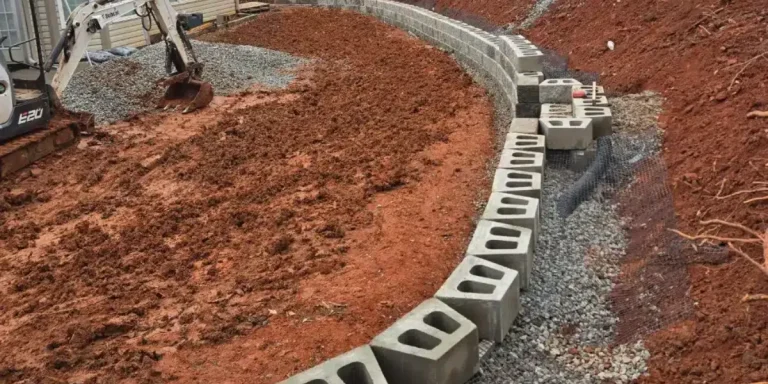
- Installation of a deep, compacted crushed stone base
- Placement of engineered segmental retaining wall block
- Angular gravel backfill for drainage
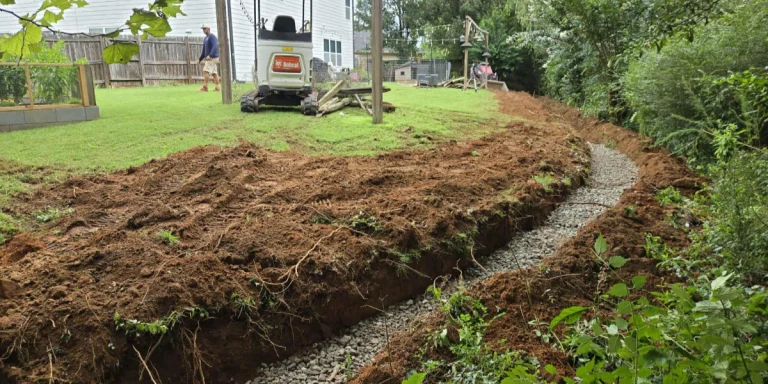
- Perforated drain pipe installed at the base
- Geogrid reinforcement extending into the hillside
- Proper surface grading along the driveway edge
Each layer plays a role in long-term stability. Skipping any step increases the risk of future movement.
The importance of drainage behind driveway walls
Driveways channel water quickly. During heavy storms, runoff flows directly toward the edge where retaining walls are often located.
We frequently integrate:
-
- French drains behind the wall
- Channel drains along the driveway surface
- Downspout extensions tied into underground piping
- Properly sloped outlet drains for gravity discharge
Without proper drainage, even a well-built wall can experience pressure buildup over time.
Material selection for structural performance
Driveway retaining walls should use engineered systems designed for load-bearing conditions.
We typically use segmental retaining wall systems that:
-
- Interlock securely
- Accept geogrid reinforcement
- Allow proper setback angles
- Provide long-term durability
Decorative blocks without reinforcement are not suitable for supporting driveway loads.
Coordinating wall replacement with driveway improvements
Sometimes replacing the retaining wall also presents an opportunity to improve the driveway itself. If cracks or settlement have already begun, addressing both at once ensures cohesive structural performance.
We may coordinate wall replacement with:
-
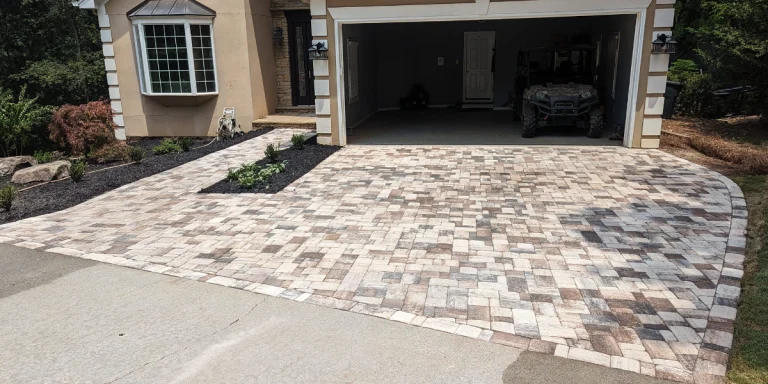
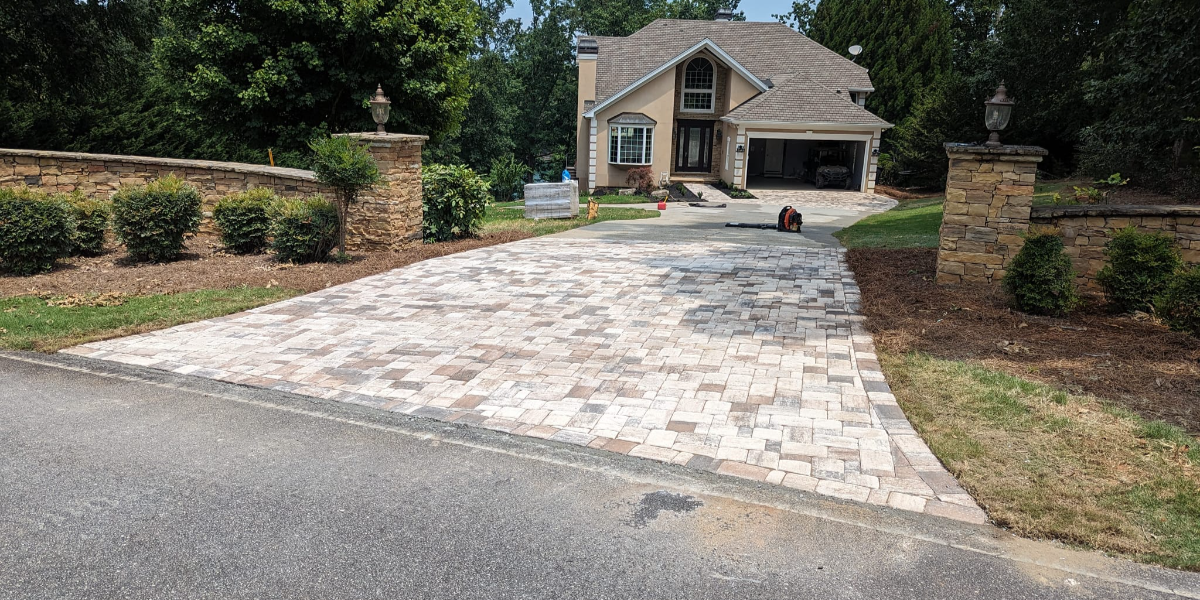
- Paver driveway installation
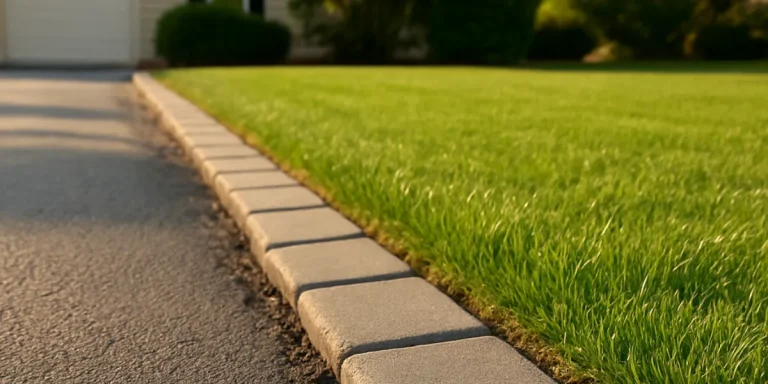
- Edge reinforcement to prevent future cracking
- Improved surface drainage design
Upgrading both components at once can improve longevity and appearance.
Long-term durability considerations
A properly built retaining wall should last decades. Long-term performance depends on correct installation from the ground up.
We focus on:
-
- Deep excavation below load-bearing depth
- Compacted aggregate base
- Continuous drainage zones
- Reinforcement appropriate for wall height
- Surface grading that prevents concentrated runoff
Driveway retaining walls are structural systems, not decorative features.
Understanding the investment
Replacing a failing driveway retaining wall involves demolition, excavation, reinforcement, and drainage integration. It is more complex than installing a garden wall.
Primary cost drivers include:
-
- Wall height and length
- Extent of demolition required
- Drainage system installation
- Geogrid reinforcement needs
- Access limitations for equipment
Homeowners often review our Landscape Pricing Guide to understand how structural retaining walls differ in cost from decorative landscape features.
Replacing the wall before driveway damage worsens often reduces overall project expense.
Common homeowner mistakes
DIY driveway retaining walls frequently fail because they underestimate soil pressure and vehicle load.
Common errors include:
-
- Using decorative block without reinforcement
- Skipping drain pipe installation
- Building on shallow or uncompacted base
- Ignoring driveway runoff patterns
Correcting these mistakes later often costs significantly more than professional installation from the start.
Areas We Serve
Razor Sharp Lawns provides professional retaining wall construction, drainage correction, and driveway integration services throughout Northeast Georgia, including:
• Dacula
• Sugar Hill
• Buford
• Braselton
• Hoschton
• Jefferson
• Surrounding areas
We build retaining walls engineered for Georgia’s clay soil, rainfall patterns, and structural load demands.
Concerned about a failing retaining wall along your driveway?
Protect your driveway before the damage spreads
If your driveway retaining wall in Dacula is leaning, cracking, or separating, early replacement can prevent more extensive structural issues.
Contact Razor Sharp Lawns today to schedule your consultation or request an estimate. We will evaluate drainage, soil pressure, and load requirements to design a replacement wall built for long-term stability and performance.